Patio/Concrete Coatings in League City, TX
Upgrade outdoor concrete with a finish selected for sun, rain, foot traffic and the Gulf Coast climate - not simply for indoor performance. League City Epoxy Flooring Pros provides information and project options for property owners comparing patio/concrete coatings in League City, TX. The right floor coating should do more than look good on installation day. It should be selected around the concrete, traffic, moisture, sunlight, maintenance and downtime that define the space.
Call Us: 1-800-Got-Divi
Patio/Concrete Coatings in League City, TX
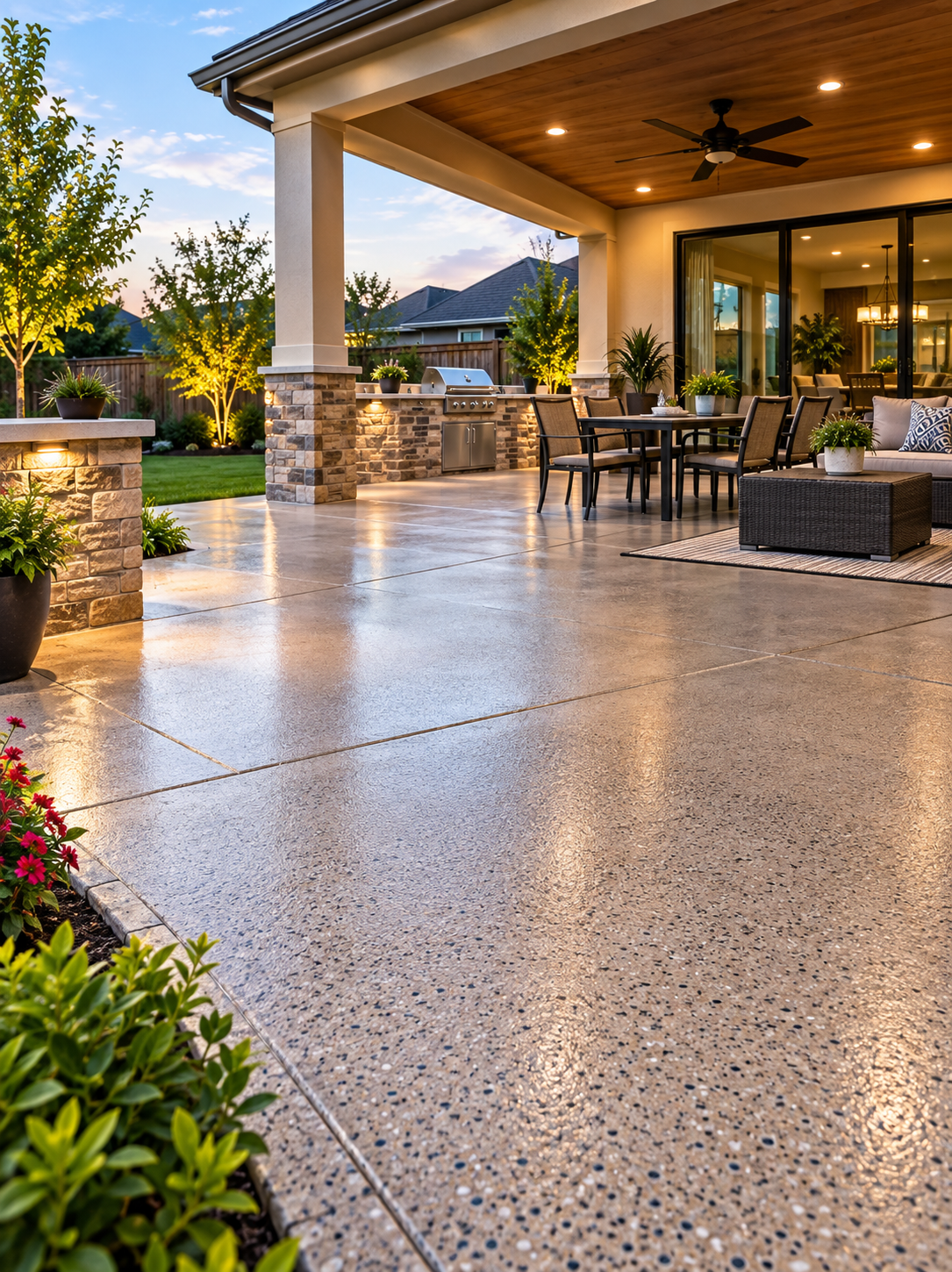
Patio and exterior concrete coatings can improve appearance, cleanability and surface protection on covered patios, porches, walkways and other compatible concrete areas. Exterior work requires special attention to UV exposure, water, texture and thermal movement. League City’s hot sun, humid air and heavy rain make outdoor coating selection especially important. Covered and uncovered areas can behave differently, and surfaces near pools or entries may need more traction than an interior floor. League City Epoxy Flooring Pros can help property owners think through the
practical choices that affect a coating project: the condition of the concrete, the way the space is used, the appearance you want, and how quickly the area needs to return to service. The goal is not to sell every customer the same coating. It is to identify a resinous flooring approach that makes sense for the substrate and the job.
Professional Patio/Concrete Coatings Services in League City
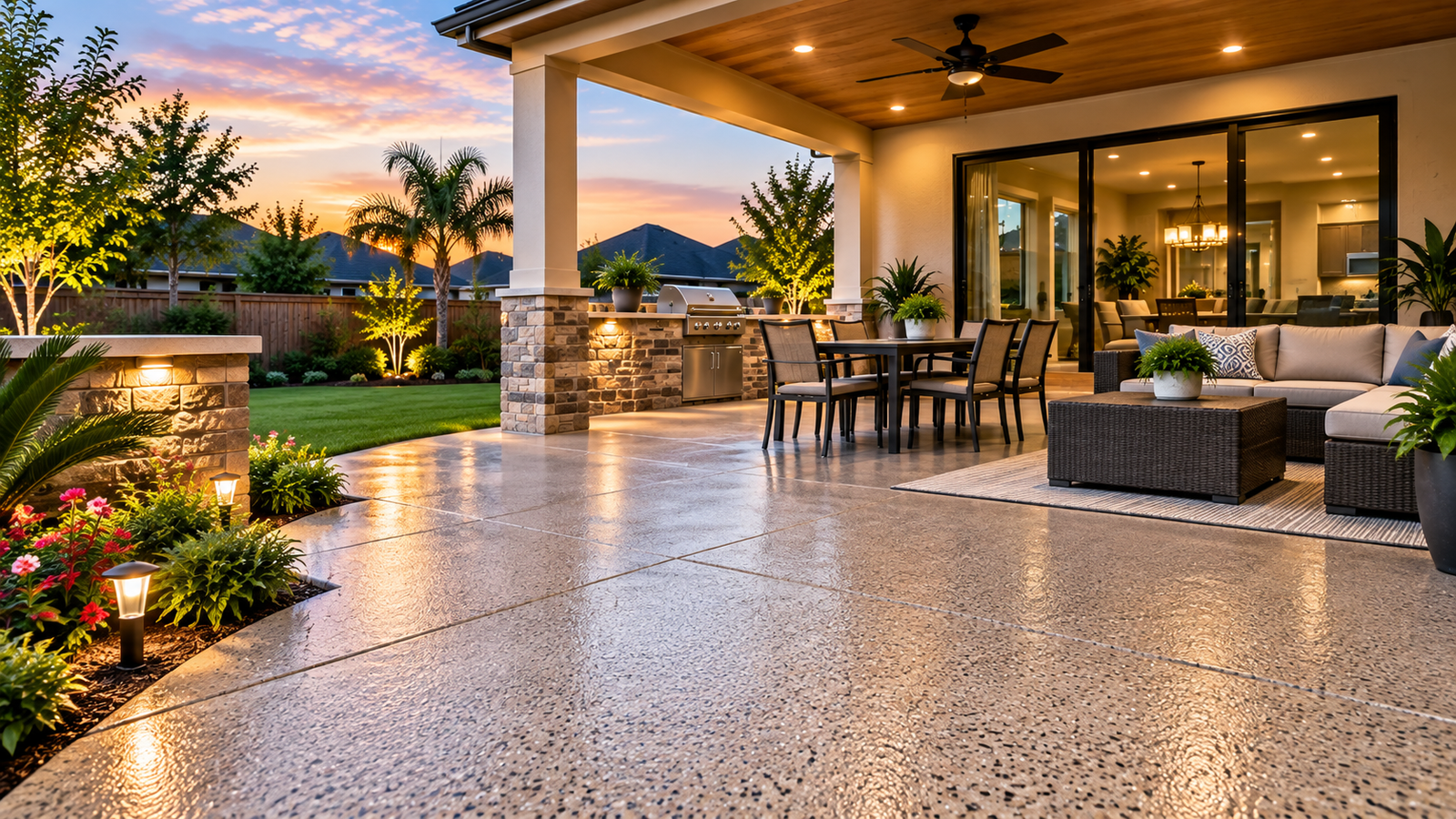
A professional coating project is more than rolling material over concrete. The slab must be clean, sound and profiled for the selected resin. Existing paint, curing compounds, sealers, oil and weak laitance can interfere with adhesion. Cracks and spalls need to be evaluated before they are hidden under a decorative finish. Outdoor concrete is unforgiving of shortcuts. Water pathways, drainage, existing sealers, UV exposure and slab movement can all affect the coating. Preparation and system compatibility matter as much as appearance. Typical projects include covered patios, porches, outdoor living areas, walkways, selected pool-adjacent concrete, and covered breezeways and entries.
Benefits of Patio/Concrete Coatings
- A refreshed decorative appearance without covering the slab with a separate tile or paver system.
- Improved cleanability and stain resistance compared with untreated porous concrete.
- Texture can be selected to improve wet-foot traction.
- UV-stable finish options can help maintain color in exposed locations.
- Decorative flakes and multi-tone systems can make outdoor living areas feel more finished.
Residential Applications
For homeowners, patio/concrete coatings can improve concrete areas that are otherwise dusty, stained or difficult to maintain. Design choices should fit the room rather than chase a showroom sample. In garages and utility spaces, practical concerns such as hot tires, grit and storage may matter most. In decorative interior areas, color movement, gloss and how the floor interacts with lighting may become more important.
Commercial Applications
Commercial properties may use patio/concrete coatings where a seamless, cleanable and professional-looking
concrete surface is desirable. Business projects should also consider operating hours, customer access, cleaning
procedures, carts or equipment, chemical exposure and phased installation. A coating that returns to service quickly can be valuable, but only when the underlying preparation and system specification remain appropriate.
Where This Flooring Makes Sense
The strongest application is one where the coating is matched to the actual service conditions. Consider traffic, direct sunlight, water exposure, chemical spills, cleaning frequency, impact, rolling loads and desired appearance. A beautiful system can still be the wrong system if it is too smooth for a wet area, too slow-curing for the available shutdown window, or not designed for UV exposure.
Materials, Colors and System Options
Exterior systems may use UV-stable polyaspartic or other light-stable topcoats, decorative flakes, textured aggregates and solid-color finishes. Traditional epoxy can be useful within a layered system, but exposed areas should be designed around sunlight and weather rather than assuming an indoor epoxy formula is appropriate outdoors. Product names can sound similar while performing differently, so specifications should be based on the complete layered system rather than a single buzzword. Ask what each layer does, how the concrete will be prepared, and what topcoat will be exposed to traffic.
Outdoor Exposure Changes the Specification
Exterior concrete expands, contracts, gets wet and receives ultraviolet light. Those conditions change the coating conversation. A product that performs well inside a climate-controlled garage may not be the best exposed finish on a patio. The contractor should consider shade patterns, roof coverage, sprinklers, drainage, pool splash, direct sun and how hot the surface becomes. Texture deserves special attention because patios may be walked on with wet shoes or bare feet. Extremely aggressive aggregate can be uncomfortable, while an overly smooth glossy surface can become slick. Color also influences perceived heat and appearance. The best exterior system balances weather resistance, traction, cleanability and the look of the surrounding home.
Surface Preparation: The Step You Do Not See Later
Preparation is one of the most important parts of resinous flooring. Mechanical profiling opens the concrete surface and removes weak material so the coating can develop a mechanical bond. The contractor should also look for oil, silicone, paint, adhesives and other contaminants. Moisture is another consideration because concrete can transmit vapor even when the surface looks dry. A professional may recommend moisture testing or a mitigation approach when conditions indicate it is necessary. Coating over an unsuitable slab can lead to blistering, peeling or other failures that are expensive to correct after the room is back in service
Why Professional Installation Matters
Outdoor concrete is unforgiving of shortcuts. Water pathways, drainage, existing sealers, UV exposure and slab movement can all affect the coating. Preparation and system compatibility matter as much as appearance. Accurate mixing ratios, batch consistency, temperature, humidity, pot life and recoat windows can all affect the finished floor.
Professional installers also have equipment for surface preparation and dust collection that is difficult to duplicate with light-duty consumer tools. The value is not simply faster application; it is a more controlled process from bare concrete to final cure.
A Typical Professional Installation Process
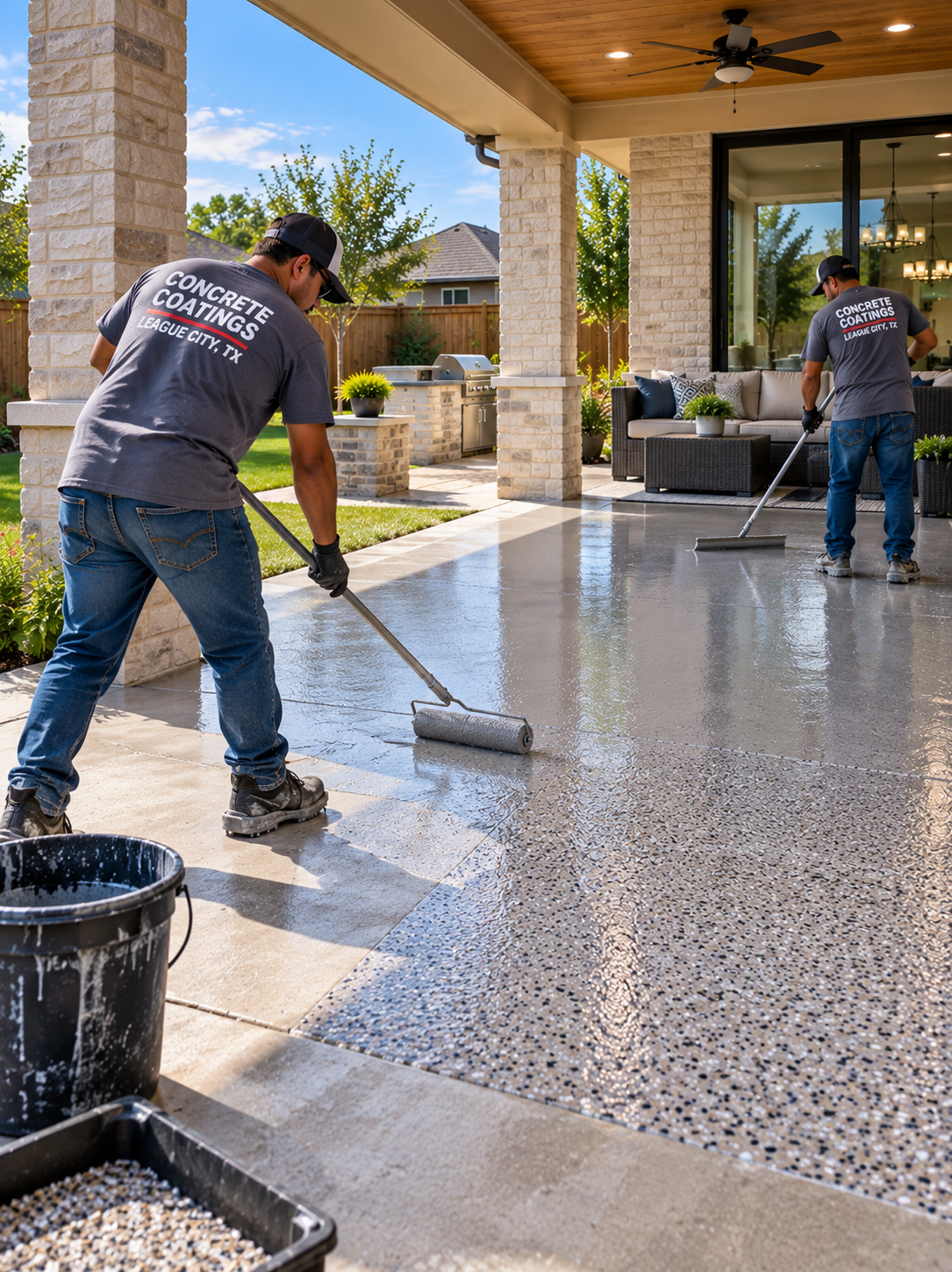
- Evaluate the slab and the space: A professional project typically begins by reviewing the concrete condition, existing coatings or sealers, cracks, contamination, moisture concerns, traffic, sunlight, chemicals and the owner’s appearance goals.
- Select the system: The coating chemistry, number of layers, decorative treatment, texture and topcoat should be matched to actual use. This is where cure time, UV exposure, cleaning and downtime are balanced.
- Mechanically prepare the concrete: Grinding or another appropriate mechanical method is commonly used to remove weak surface material and create a profile for adhesion. Edges and hard-to-reach areas need attention too.
- Repair and detail: Cracks, spalls, pits and damaged joints are addressed as appropriate. Repairs should be compatible with the coating system and the expected movement of the slab.
- Apply primer or base layers: The first resin layer must wet and bond to the prepared substrate. Decorative media, color coats or build layers are added according to the selected system.
- Broadcast or create the finish: For flake systems, chips are broadcast into wet resin. For metallic systems, pigments are manipulated to create movement. Solid-color systems are applied for even coverage
- Seal and protect: Clear or pigmented topcoats can add abrasion resistance, chemical resistance, UV stability, desired sheen and traction.
- Cure and return to service: The floor should remain protected until it reaches the product-specific cure needed for foot traffic, moving items back into place and vehicle or equipment traffic.
Choosing a Patio/Concrete Coatings Contractor in League City, TX
Compare contractors on the details of the proposed system rather than the headline price alone. Ask how the slab will be prepared, what repairs are included, which coating chemistry is used in each layer, how texture will be created, and
when the area can safely return to service. Request clear expectations about color variation, crack visibility, joints, moisture and maintenance. Be cautious with proposals that promise a universal coating for every slab or skip mechanical preparation without a project-specific reason.
Why Consider League City Epoxy Flooring Pros
League City Epoxy Flooring Pros is positioned around one clear need: helping League City property owners improve concrete floors with coating systems suited to the space. A useful consultation should focus on your goals, the slab, exposure conditions, design preferences and schedule. That approach makes it easier to compare options without relying on unsupported promises or one-size-fits-all recommendations.
League City and Nearby Service Area
This page is focused on patio/concrete coatings in League City, Texas. Projects may also be relevant for property owners in Clear Lake, Dickinson, Friendswood, Kemah, Webster, Nassau Bay, and nearby Galveston County and
southeast Houston-area communities. Service availability should be confirmed for the specific address and project scope.
Planning Your Project
Before requesting an estimate, think about how the space will be used during the next several years. Note any oil, cleaners, pool chemicals, vehicle traffic, rolling equipment, direct sun, standing water or heavy items. Decide whether
easy cleaning or maximum traction is the higher priority, because texture affects both. Also identify any deadline for moving vehicles, inventory or furniture back into the area. Those details help a contractor recommend a system rather than simply quote square footage.
Frequently Asked Questions
Can epoxy be used on an outdoor patio?
Some epoxy-based systems can be part of an exterior assembly, but many traditional epoxies are not ideal as the exposed finish because UV light can discolor or chalk them. Exterior-rated systems should be selected for the location.
What coating is good for a League City patio?
A suitable system should account for sunlight, rain, moisture, expected foot traffic, cleaning and desired texture. UV-stable topcoats are often important.
Can patio coatings be slip resistant?
Yes. Texture or aggregate can be added, which is particularly useful around wet areas. The amount of texture should balance traction with cleanability and comfort.
Can you coat concrete around a pool?
Certain coating systems can be used in pool-adjacent areas, but heat, wet-foot traction, chlorine exposure, drainage and surface temperature should all be considered.
Will a coating fix low spots or drainage problems?
A coating is not a substitute for correcting significant drainage or slope problems. Standing water and chronic moisture should be addressed as part of project planning.
Can old patio paint be coated over?
Only if the existing material is sound and compatible. Often, old paint or sealer must be removed so the new system can bond to properly prepared concrete.
How do outdoor coatings handle sunlight?
UV stability varies by chemistry. Polyaspartic and certain urethane-type finishes are often selected when color stability in sunlight is important.
How should coated patios be maintained?
Remove leaves and grit, rinse or wash as appropriate, use compatible cleaners and avoid harsh methods that unnecessarily abrade the finish.
Have a differint Question?
Request an Estimate for Patio/Concrete Coatings in League City
If you are comparing options for patio/concrete coatings in League City, TX, contact League City Epoxy Flooring Pros to discuss the concrete, how the space is used, the look you want and your scheduling needs. A good estimate should help you understand the proposed preparation, coating layers, texture and return-to-service expectations so you can make an informed decision.
If you've been searching online for:
“Epoxy flooring in League City, TX”
“Epoxy Flooring Contractor in League City, TX”
“League City epoxy flooring contractor”
“Garage epoxy flooring near me”
“Commercial epoxy flooring League City”
—you've come to the right place.
Give your concrete more than a coat of paint. Give it a professionally prepared and installed flooring system designed around your property.
Contact League City Epoxy Flooring today to request an estimate and start planning your new floor.